
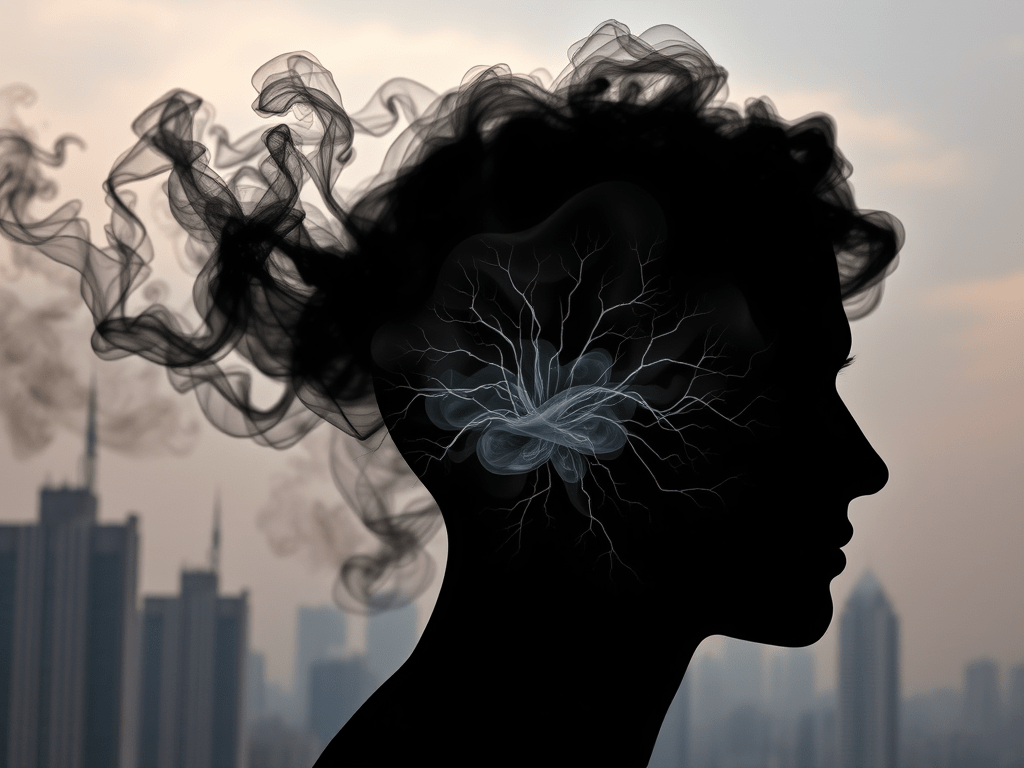
Did you know that the air we breathe every day can directly affect our mood, memory, and even our personality?
Air pollution is no longer just an environmental issue—it has become a serious health concern. While most of us think about the lungs and heart when discussing the harmful effects of polluted air, a growing body of research points to a quieter, more insidious danger: the damage airborne toxins cause to our nervous system. The air we breathe is no longer just a source of life—it has also become a silent threat to our mental and neurological health.

What happens to our brain when we are constantly exposed to polluted air?
Fine particles like PM2.5 and other toxic substances from vehicle exhaust, industry, and the burning of fossil fuels can enter our bodies through the lungs—but also directly through the nose, via the olfactory nerve, and end up straight in the brain. There, they cause:
- Inflammation of brain tissue
- Disruption of neurotransmitter activity (serotonin and dopamine)
- Accelerated neuronal degeneration
- Increased risk of depression, anxiety, ADHD, and dementia
- Impaired brain function and behavioral changes
The most vulnerable: children
Children growing up in urban areas with high pollution levels show reduced cognitive abilities, learning difficulties, and a higher tendency toward neurological disorders. Delayed speech development and reduced attention span have been recorded. Their brains are still developing and are especially sensitive to external influences.
And older adults?
In the elderly, air pollution significantly accelerates brain function decline, increasing the risk of Alzheimer’s and Parkinson’s diseases, and even stroke. Long-term exposure to air toxins speeds up cognitive decline, dementia, and neurodegenerative processes.
Statistics: Neurological diseases linked to air pollution
According to the World Health Organization (WHO) and neurological research:
- Parkinson’s disease affects over 10 million people worldwide. The risk increases significantly for those living in polluted urban environments. Studies from the U.S. show that long-term exposure to PM2.5 particles raises the likelihood of developing Parkinson’s by 35–50%.
- Depression and anxiety – Research published in JAMA Psychiatry shows that people exposed to higher pollution levels are 18% more likely to develop depression and 15% more likely to suffer from anxiety.
- Stroke is directly linked to air pollution. WHO estimates that up to 29% of all stroke-related deaths are connected to exposure to polluted air, especially in urban areas.
What does the law say? Are we being protected?
In many countries, air quality laws are either too lenient or poorly enforced. The European Environment Agency warns that even in the EU, member states often exceed legal limits for PM2.5 and NO2.
The EU Green Deal aims to reduce premature deaths caused by air pollution by 55% by 2030.
Serbia and the region have air quality laws, but enforcement and penalties for polluters are often lacking. Public reporting systems are frequently delayed or lack transparency.
Is there hope?
Yes. By changing our lifestyles and putting pressure on institutions, we can help improve air quality:
- Use public transport, cycle, or walk
- Plant trees and support green policies
- Use air purifiers indoors
- Follow local air quality reports (AirVisual, IQAir)
- Demand accountability from local authorities and polluters
- Stay informed and share knowledge – an invisible enemy is most dangerous when ignored
Civic pressure, local monitoring, and environmental activism are key to change.
Conclusion
Air pollution is not just an external problem—it changes us from within, affecting our emotions, memory, and ability to think. This is a call to action. Not because of abstract data, but because every breath matters for the health of our brain.
The air we breathe is a brain issue. And the brain is the issue of our future.
👉 Share this message and let’s all breathe—consciously and more healthily.

Green shield
20,00 $



 new way
Postavi komentar