
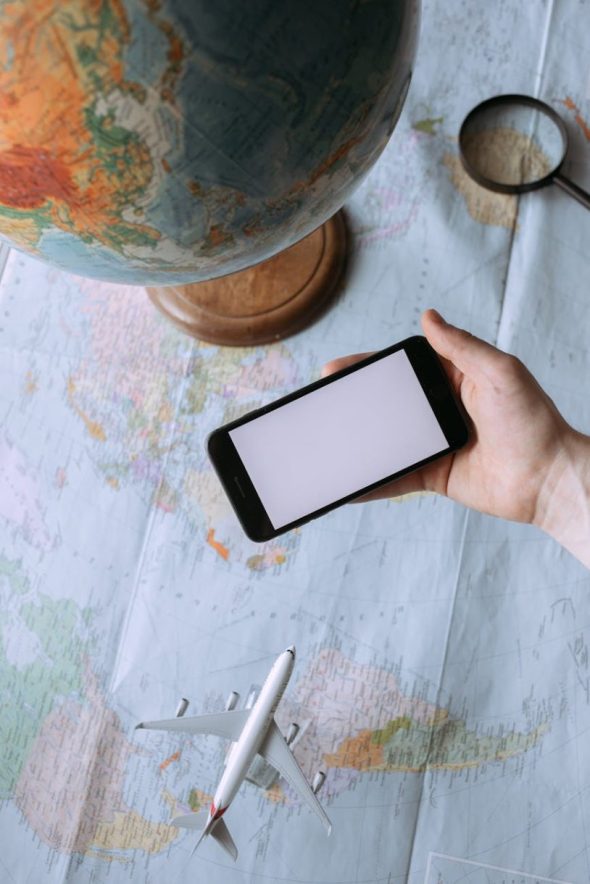
Globalization, Media, and Stress: Understanding the Modern Way of Life
What is globalization?
Globalization represents a transformation that affects society as a whole, with its impact visible in various areas — starting from media, economy, culture, education, and many others.
In other words, globalization affects everyone, everywhere, and in every aspect of life.
In the following text, I will focus on the media, as I believe they are largely responsible for many changes around the world — both positive and negative.
How are these two fields connected by so-called „invisible threads“?
By directly stimulating each other’s development — globalization has contributed to the availability of technology and media in almost every part of the world, while media, on the other hand, provide accessibility and an incredible speed of spreading information globally.
The emergence of the Internet…
With the emergence of the internet, many boundaries have been opened, physical barriers broken down, societies united, and new trends created. The world has become one place — horizons are expanding, and religious and cultural differences are being discovered and accepted.
However, the availability of various types of information from around the globe has begun to affect us — people — both positively and, unfortunately, destructively.
In addition to the positive aspects, such as the opportunity to gain new knowledge, the rise of artificial intelligence, and many others, there are also negative effects — such as the impact on mental, and therefore overall, human health. These include media addiction (especially among teenagers), increased anxiety, depression, sleep disorders, and more.
One of the co-authors of related studies and the Chief Science Officer for the American Psychological Association explained:
“Most adolescents begin using technology and social media during one of the most important periods for brain development in our lives. Our research shows that checking behaviors on social media may have long-lasting and significant consequences for the neural development of adolescents — something that parents and policymakers need to take into account when considering the benefits and potential harms associated with excessive technology use among teenagers.”
In whose hands is human life?
Do you know what the three greatest enemies of humanity are today from a medical point of view?
Cancer, stroke, and mental disorders.
And the main culprit? Stress.
Stress is the main trigger!
The number of dissatisfied people is growing almost at the same lightning speed as media development… But how are the two connected?
Our brain is bombarded daily with a flood of virtual information — through advertisements, video clips, and an overwhelming stream of data from our professional and personal lives. We are too exhausted by everyday obligations to even question:
„Is what I’m seeing real, or is it fake?“
„Is someone benefiting from my rosy view of this content?“
„What is the source of this information?“
„Is it worth watching this?“
„How will this video or article affect me?“
These are all questions we don’t have the time — or energy — to reflect on. It’s easier to accept everything at face value, to believe what’s being „served“ to us, and to blindly follow trends, spending money on things that only bring short-term happiness.
The need for money keeps growing. We’re forced to take on extra jobs, we have less and less free time, we socialize less, and the demands and expectations imposed by society are becoming increasingly high and unattainable.
As a result, stress arises. Depression. Dissatisfaction. And in that dissatisfied state, we reach for our phones. An ad pops up. We click on a website that convinces us their service can solve our problems. Or we scroll through photos of friends on vacation, dining at luxurious restaurants, and we think,
„This could make me happy too.“
So we reach for it — and with that, our financial needs grow. Then stress returns, and with it, the unwanted side effects…
It becomes almost unimaginable to simply pick up a good book and fully disconnect our minds. In both personal and professional relationships, we become more superficial. We can’t dedicate ourselves to anything deeply anymore because our psyche is overloaded.
We grow increasingly dissatisfied, spinning in this vicious cycle — while someone, it must be said plainly, is getting rich off our struggles.
What is the real purpose of bombarding us with meaningless details?
We are all familiar with the strategy of powerful forces that goes:
„Numb, confuse, then rule.“
Scientific findings in psychology show that continuous exposure to stimuli dulls our responses.
What seems unacceptable to us today might feel completely normal in a month — depending on how many times per day we are exposed to a particular detail or piece of information.
All of this means that sooner or later, we may all become victims of some form of manipulation, depending on the interests of those who hold the power to manipulate.
How can we defend ourselves against media manipulation?
Will we allow ourselves to start behaving like machines — reacting automatically, without thinking, to someone else’s direct signals — or will we make the effort to preserve logical, conscious thinking? The choice is ours.
Pay attention to what you watch and read. Be aware of the kind of information you’re exposing your mind to.
Start noticing how much time you spend on your phone each day — scrolling through social media, making calls…
Make a decision: try to reduce that time by just half an hour a day — and use it to go for a short walk instead.
Spend more time in nature, near water — you’ll notice how your thoughts start to clear. When you return home, you might not even be able to focus on your problems because you’ve recharged with a different kind of energy.
Instead of spending hours talking on the phone with a friend — go out and meet them in person.
Let’s use globalization and media to explore new things, share knowledge, break stereotypes, and support each other.
Humans are social beings, and only as long as we behave in this manner can we hope for a positive outcome in the face of inevitable change.
change projects
20,00 $



 new way
Postavi komentar